Team Workflow with Reqode

A shared operating model, not another org chart
Assign ownership of product decisions, architecture, implementation, and evidence without prescribing job titles.

Decisions become reviewable

Architecture travels with the work
Architecture rules and dependencies stay available to every implementer.

Evidence survives every handoff
Specifications, changes, Findings, tests, and milestone progress stay connected.
Choose the team shape that fits
Use the model with a solo owner, product squad, or subsystem teams.
One owner with focused AI support
One person owns product and technical decisions while AI accelerates the work.
- AI Analyst drafts reviewable specs.
- AI Subsystem Architect proposes implementation rules.
- The owner approves changes and evidence.
One context across product and engineering
Product, engineering, QA, and delivery work from connected artifacts.
- Product owns intent and specifications.
- Engineering owns architecture and implementation.
- QA and delivery evaluate evidence.
Local ownership, one product model
Subsystem teams keep local context while product intent and dependencies stay connected.
- Each subsystem keeps clear boundaries.
- Cross-subsystem dependencies stay visible.
- Release evidence stays visible at project level.
Clear ownership at every stage
These are responsibility lanes, not fixed job titles. One person or team can own several.
Own product truth
Define outcomes, review AI proposals, and approve specification changes.
Own architecture rules
Maintain subsystem boundaries and implementation rules.
Own implementation
Implement with exact change context and review all code.
Own delivery evidence
Design tests, review Findings, and keep evidence current.
Own priorities and release
Track Issues, Test Runs, and release readiness.
Separate permissions from titles
Project Roles define access independently of job titles.
Human decisions remain the control points
People accept product and architecture proposals, review code, and decide what to release. Scoped verifiers record their results automatically.
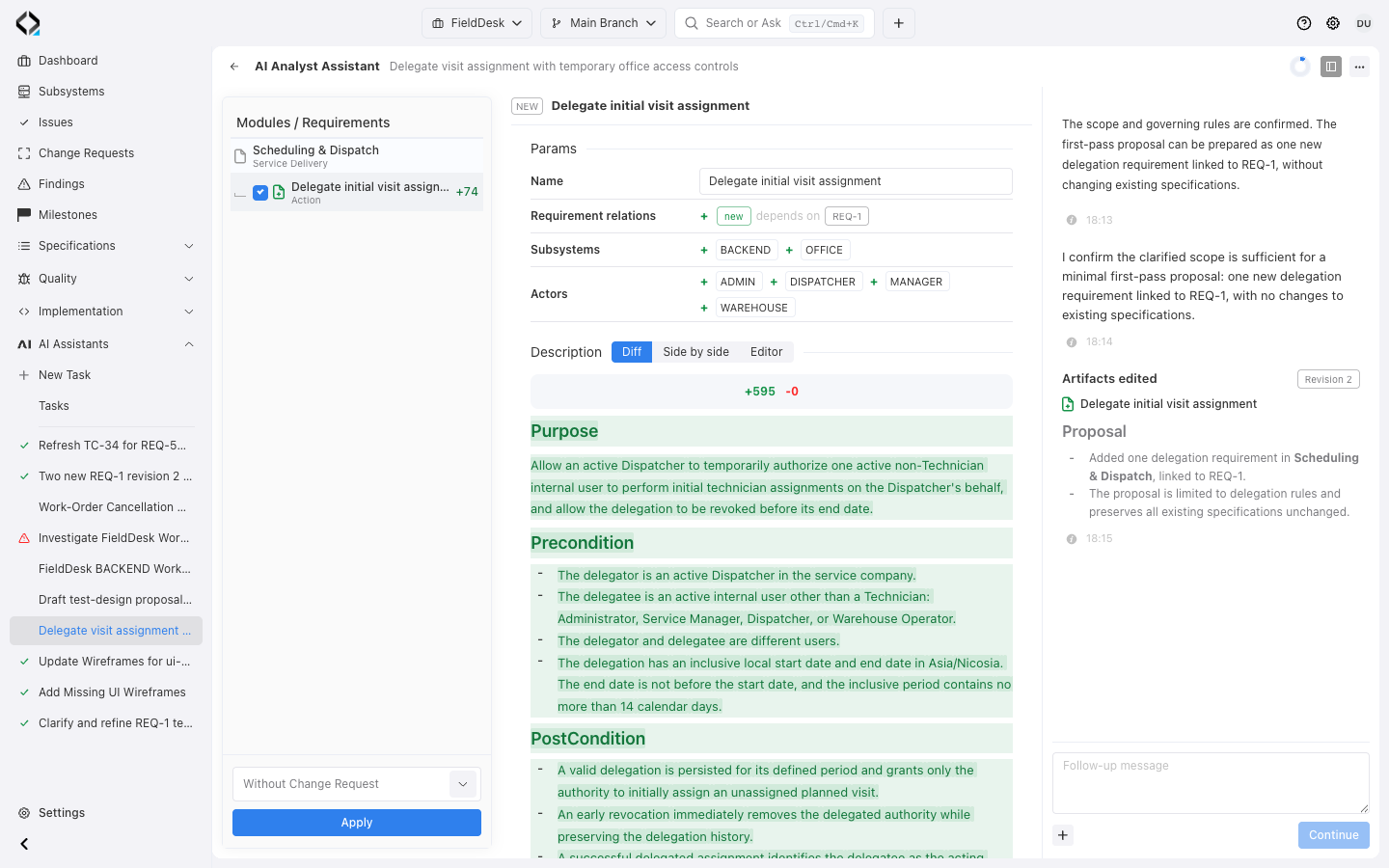
More views
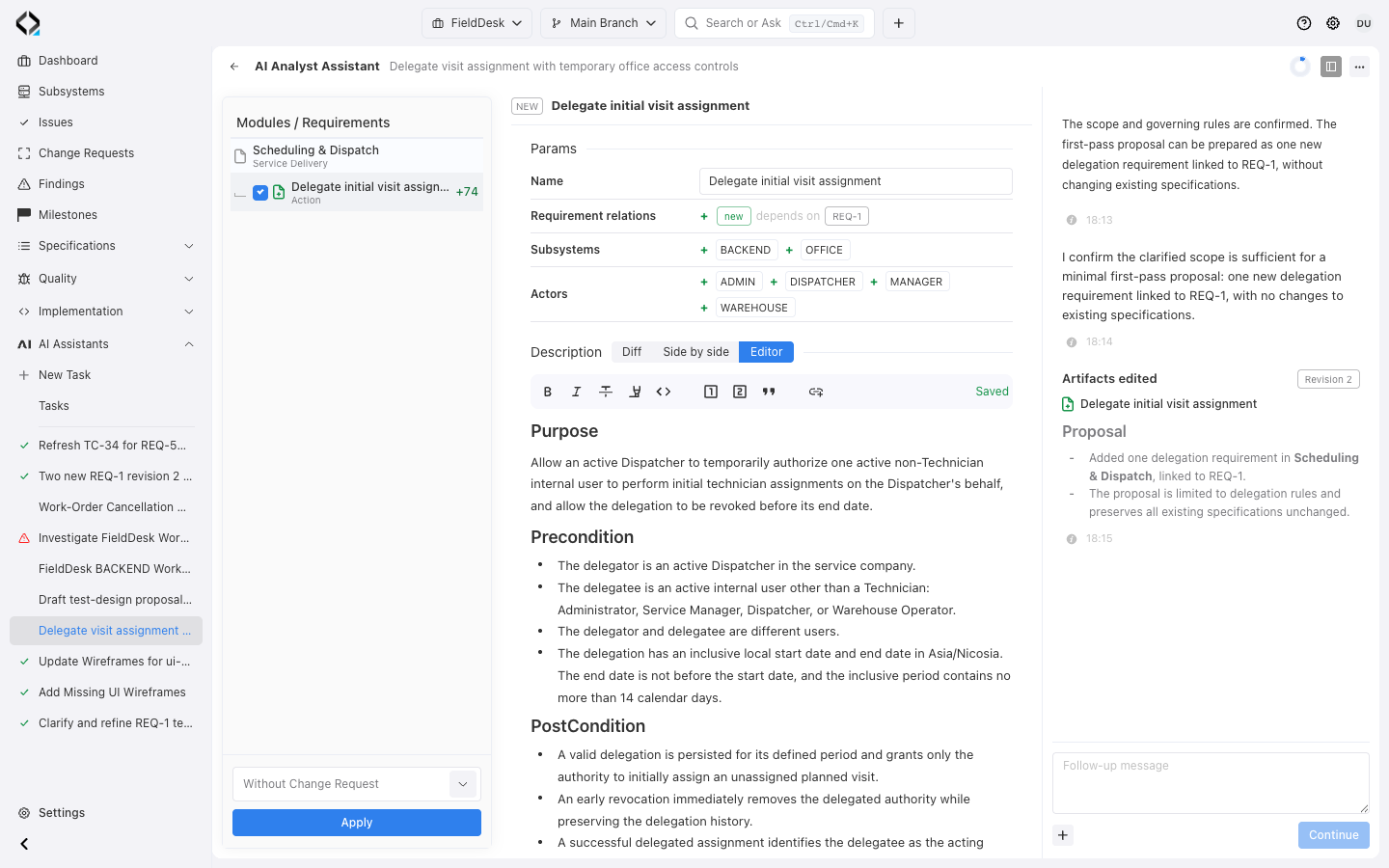
Edit the proposed requirement before accepting product changes.
Review before product truth changes
People choose which AI Analyst proposals update specifications.
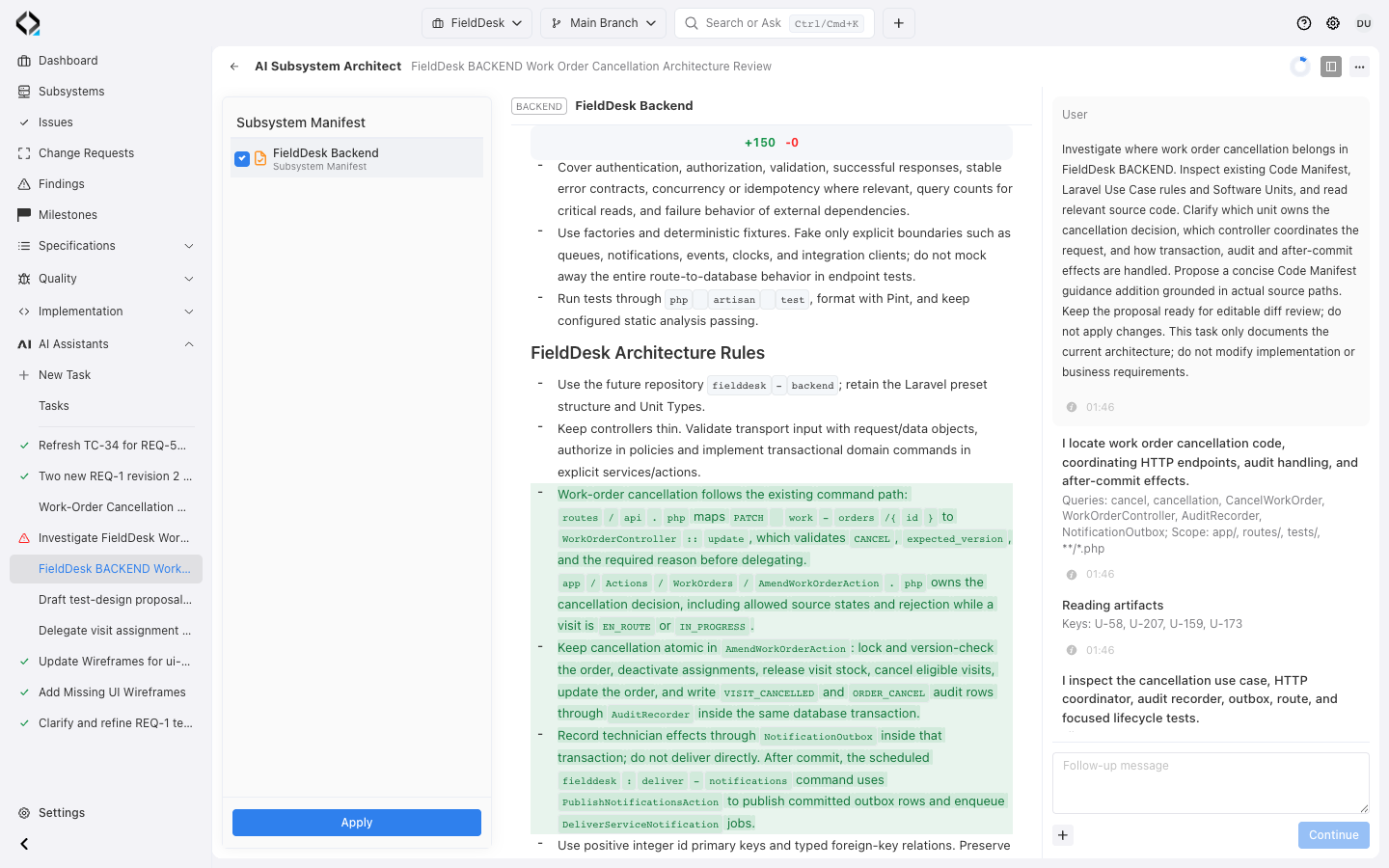
More views
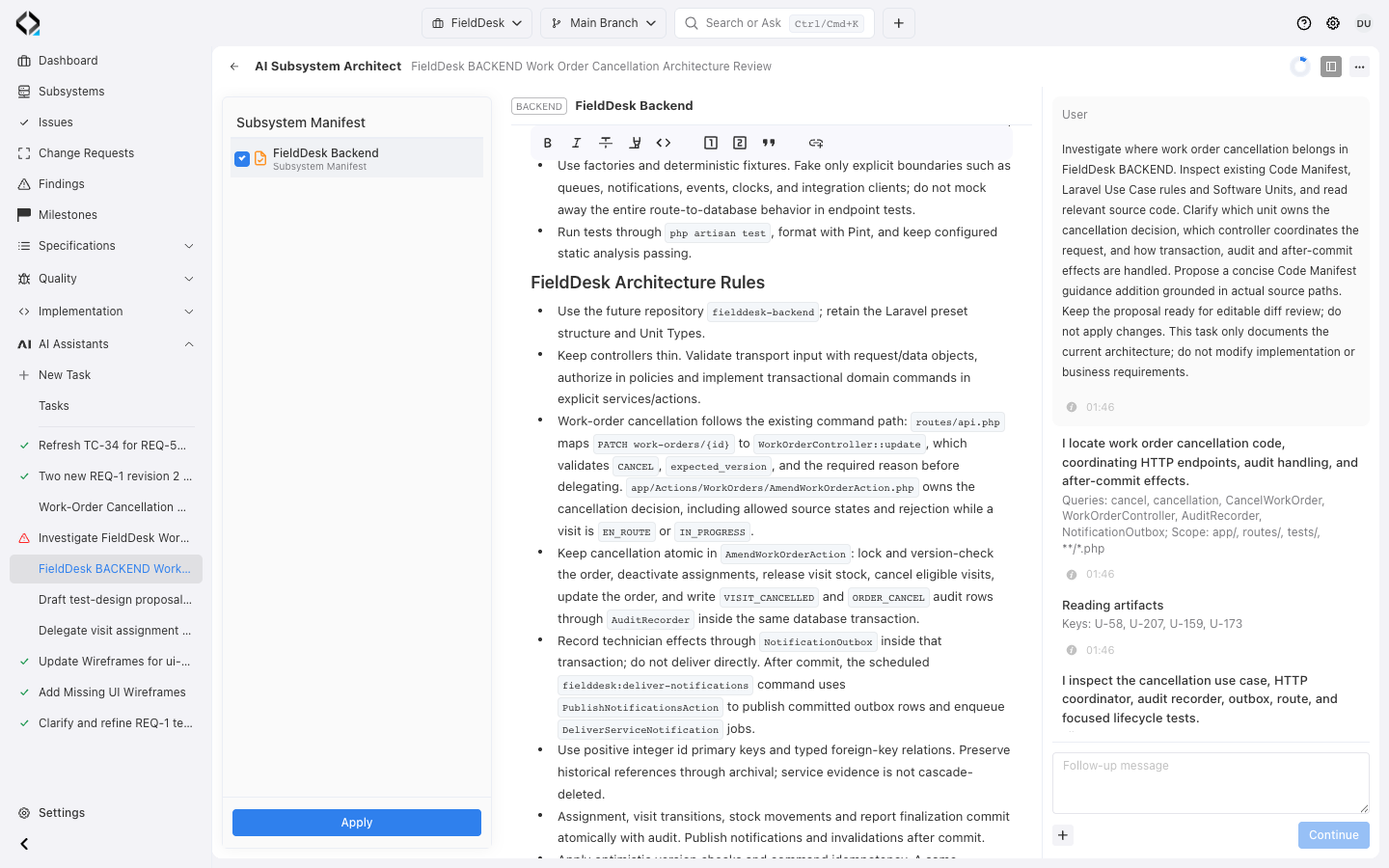
Review and edit the architecture proposal before Apply.
Review before guidance becomes a rule
People approve Code Manifest and Unit Type updates.
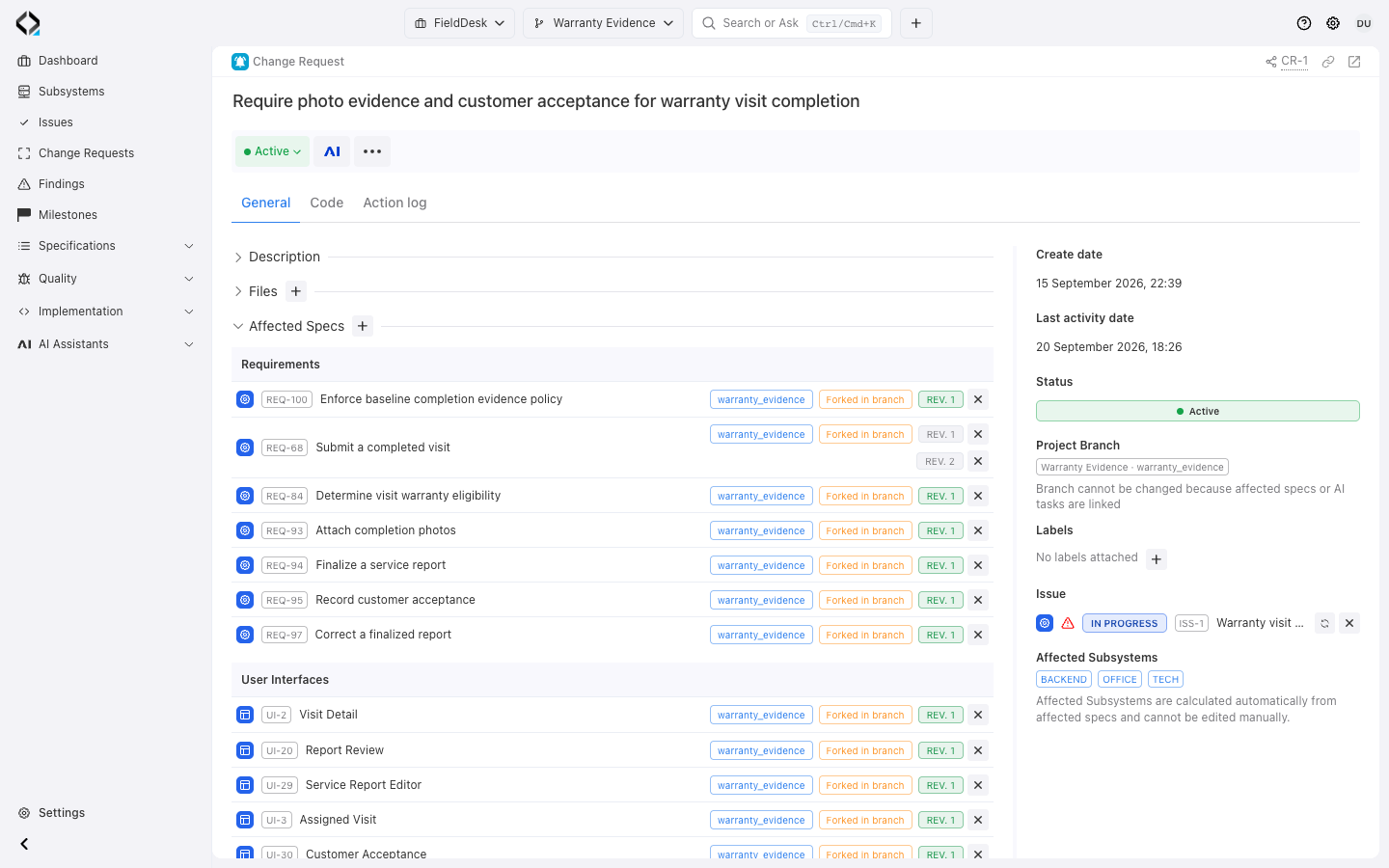
More views
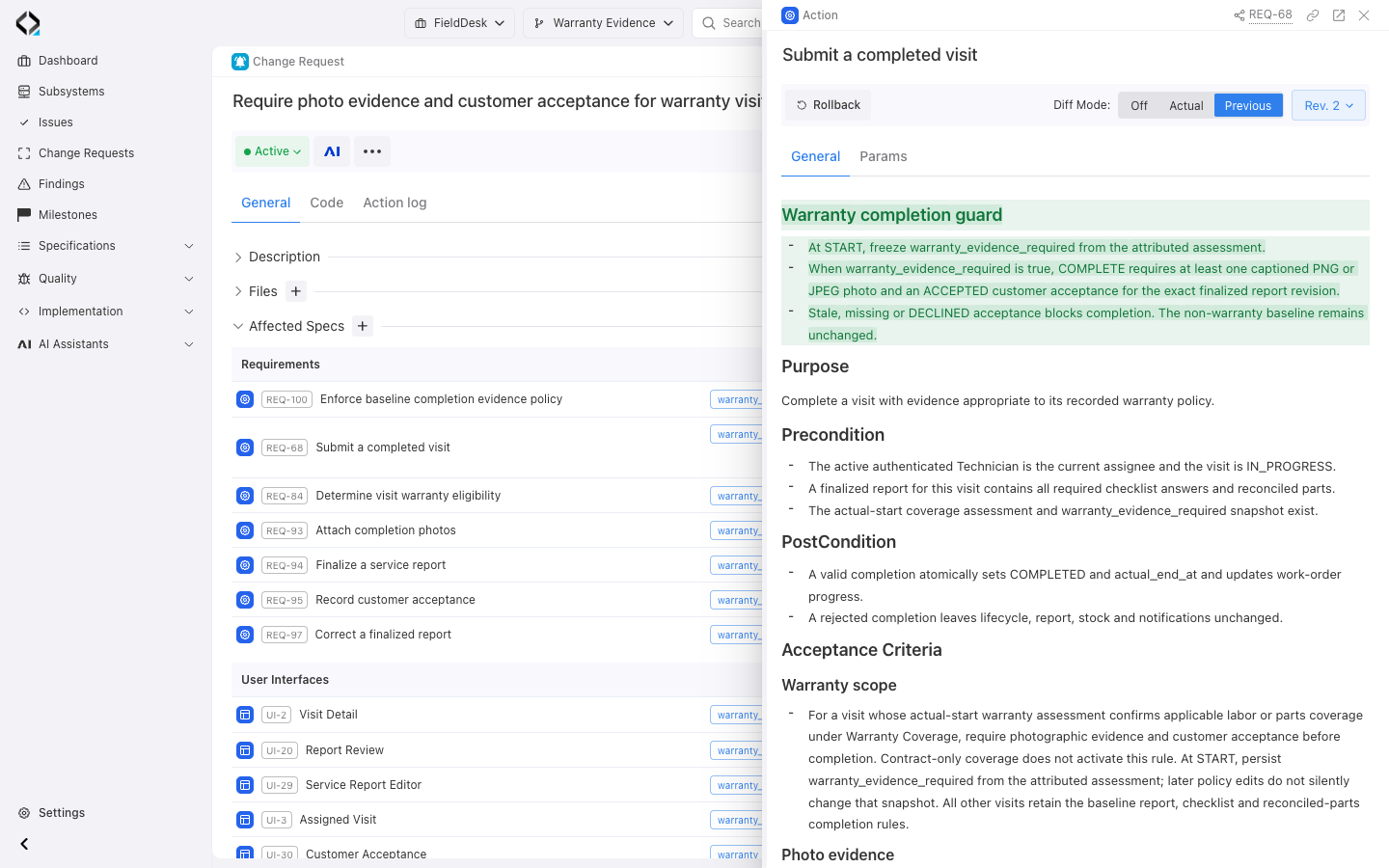
Open the exact requirement revision linked to the Change Request.
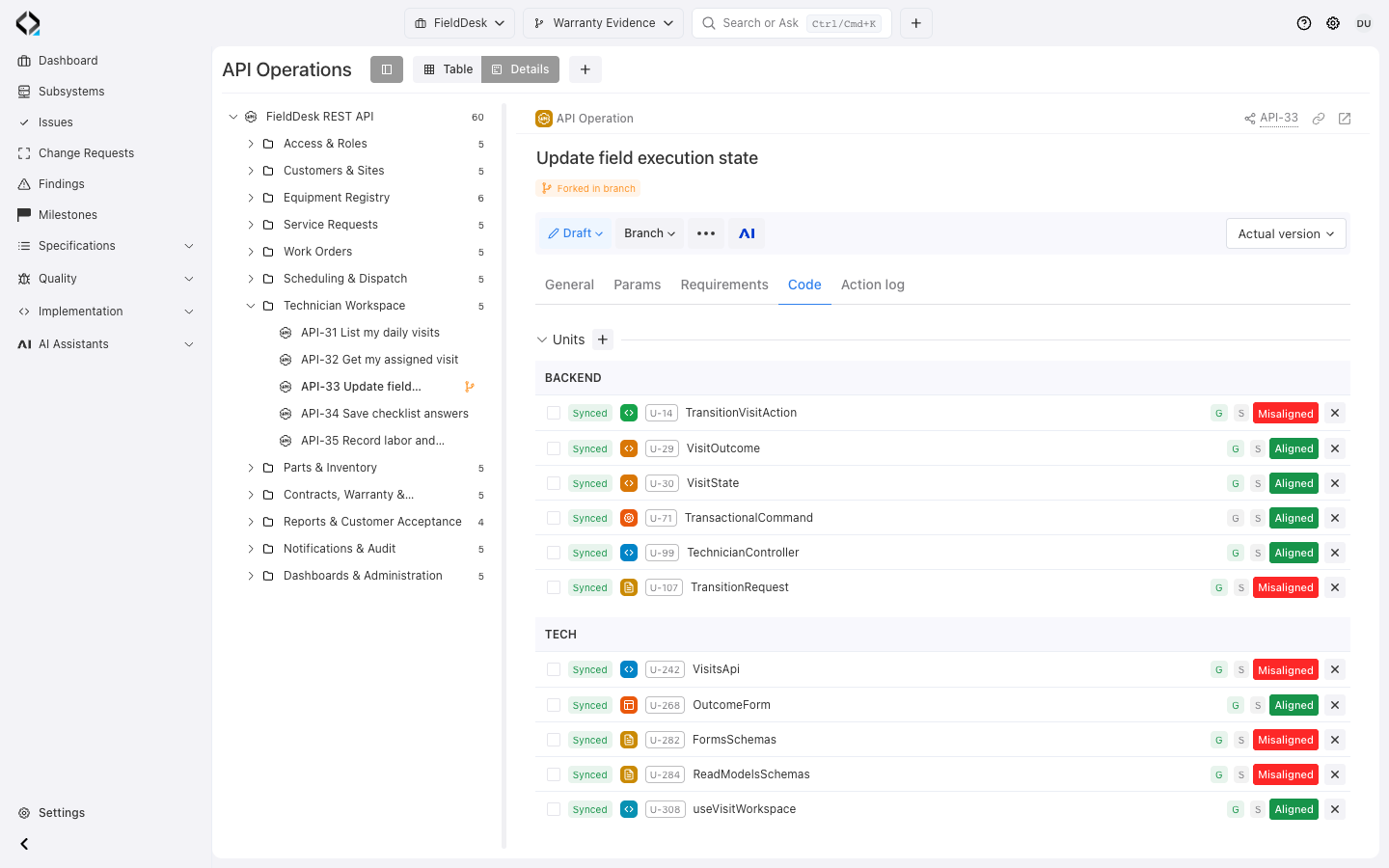
API-33 exposes existing implementation units; no branch commits are recorded.
Hand off bounded context, then review code
Change Requests anchor agent context. Teams still review and merge code.
Start with one real change
Choose a feature that needs coordination across specifications and implementation.
Choose the change
Pick an active feature, Issue, Finding, or specification update.
Name the owners
Assign each decision, even if one person owns several.
Prepare reviewed context
Update specs and architecture, then define scope in a Change Request.
Implement and close the loop
Pass the key through MCP, review code, resolve Findings, and record test evidence.
Continue into the detailed workflows
Choose the workflow for the next handoff.


Build a team workflow around shared context
Give each decision an owner and each handoff the accepted context.