Architecture Governance for AI Development
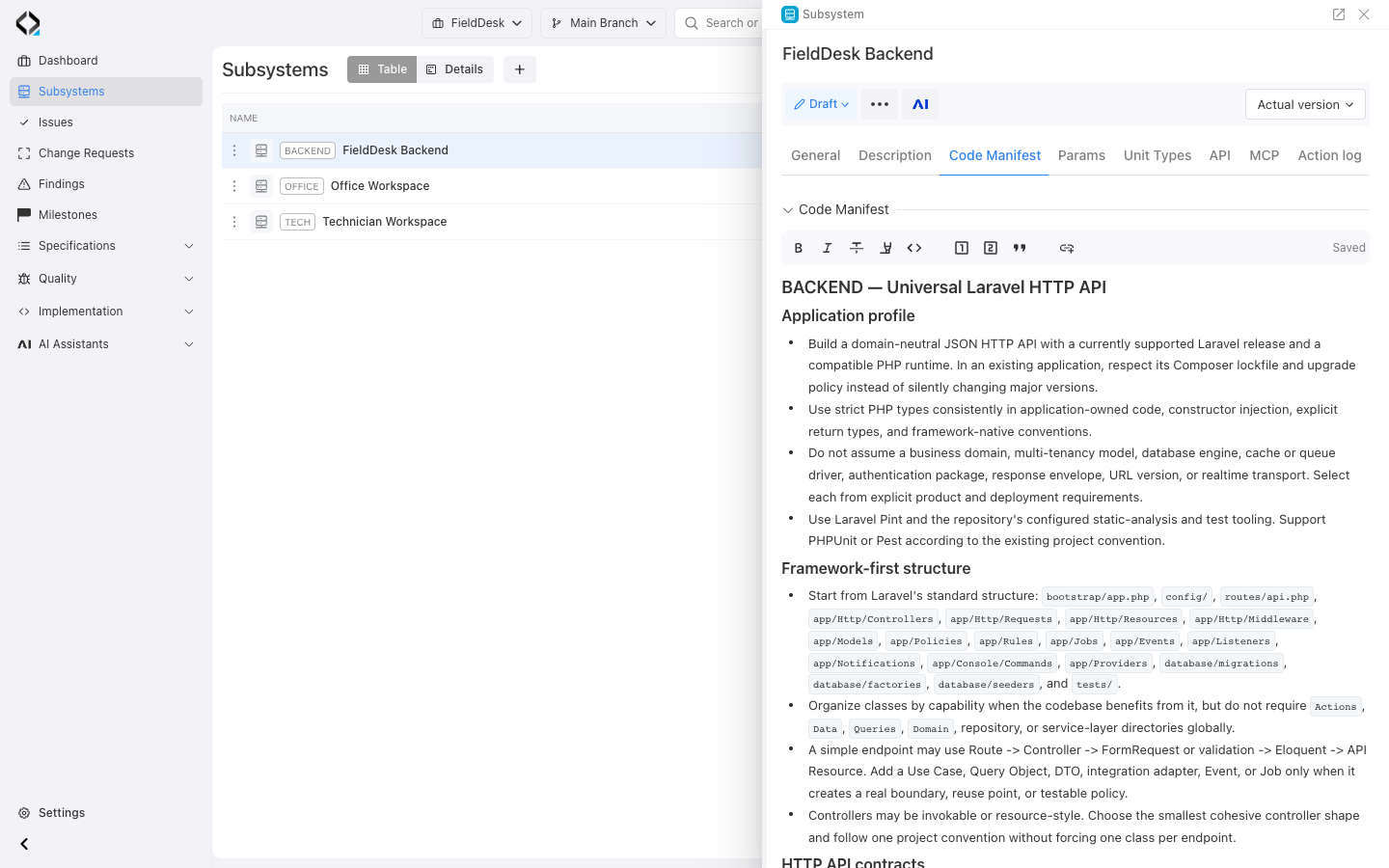
Open the subsystem Code Manifest
BACKEND defines the Laravel architecture, repository conventions and boundaries for FieldDesk implementation.
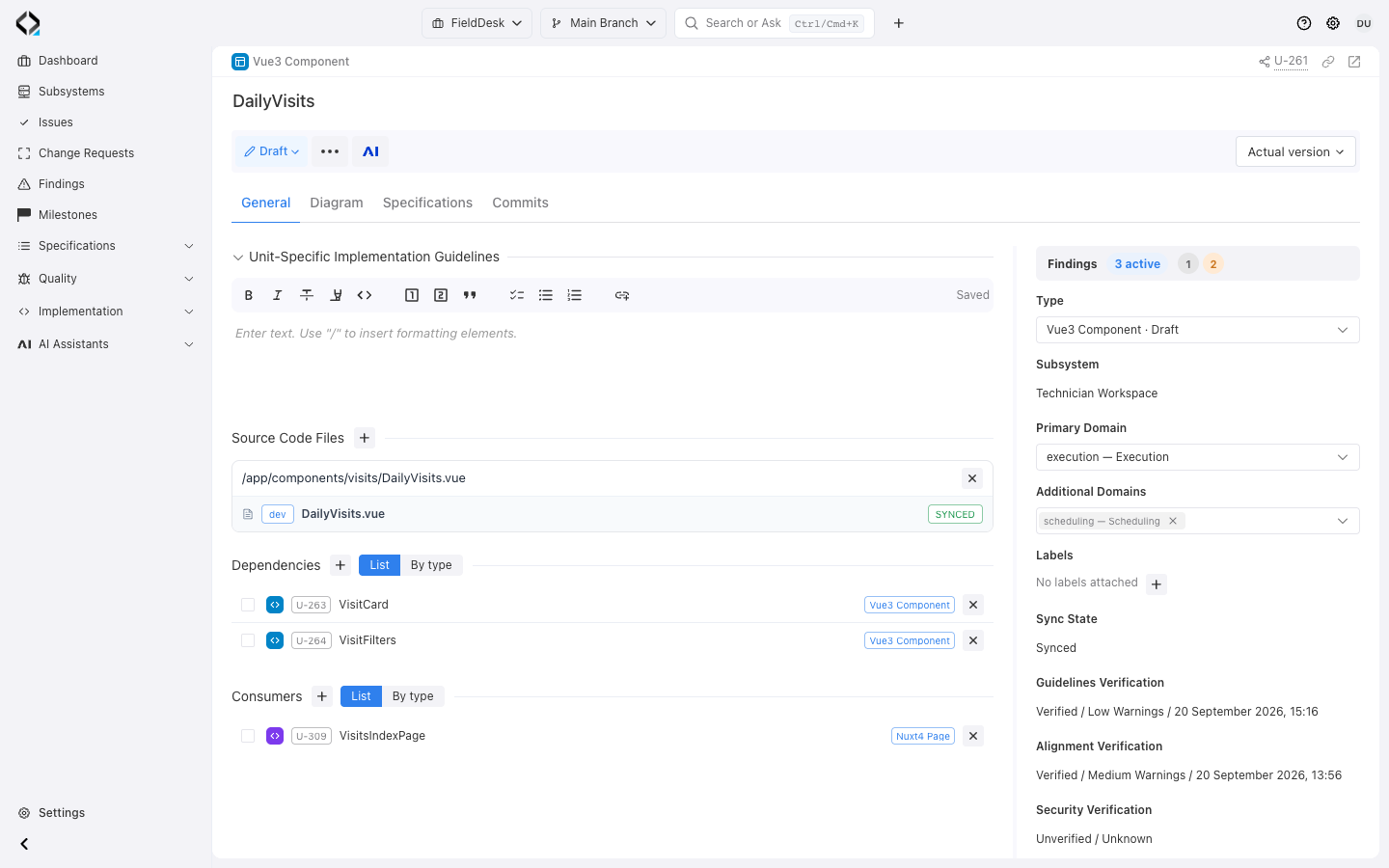
Architecture guidance, connected to the codebase
Reqode keeps architecture guidance close to the implementation structure. Subsystem rules explain the overall approach, Unit Types define how recurring code roles should be implemented, and software units connect those rules to actual files and product specifications.
The same structured context can be read by people, delivered to coding agents through MCP and used by verification workflows to detect architectural drift.

Subsystem Code Manifest
Define the architecture, technology boundaries and common implementation rules for a subsystem.

Unit Types
Describe the purpose, placement, naming and constraints of recurring implementation roles such as controllers, actions, components or tests.

Software units
Apply architectural roles to meaningful implementation blocks and connect their files, dependencies and related specifications.
Evolve guidance with the codebase
The subsystem Code Manifest sets architecture-wide boundaries. Unit Types define the rules for each implementation role. Software units connect both to the source files they govern.
Coding agents use this guidance when changing code. Guidelines verification checks the implementation against the same rules and records deviations as findings.
AI Architect investigates the Code Manifest, Unit Types, selected units, and source code before proposing guidance changes.
Resolve clarification questions, inspect the diff, edit the proposal, and apply accepted guidance.

Prepare guidance and check implementation
AI Architect helps develop guidance in a subsystem context. Software Units connects that guidance to implementation, and Continuous Verification provides scoped checks and findings.