Requirement-Centric
Requirement
A versioned, reviewable statement of expected behavior.
-

Define
Add the detail needed to understand the intended behavior.
- Related requirements
- Data Entities
- User Interfaces
- API Operations
-

Implement
Connect product intent to the code that delivers it.
- Software Units
- Source files & dependencies
- Architecture guidance
-

Change
Preserve what is changing, why, and the affected scope.
- Revisions & branches
- Change Requests
- Issues
-

Verify
Check that the expected behavior remains complete and aligned.
- Test Cases & coverage
- AI verification results
- Findings
Each connected artifact keeps its own structure, lifecycle, and purpose.
What requirement-centric work changes
A shared point of orientation improves daily work without forcing every role into the same view.

Focused context
Open one requirement and retrieve the connected context needed for analysis, implementation, testing or an AI task. Without passing the entire project as a context dump.

Traceable impact
See which specifications, software units, files and tests may be affected before a change is implemented or verified.

Shared product intent
Product, engineering, QA and AI agents work from the same expected behavior while using the artifacts relevant to their responsibilities.
Intent connected to evidence
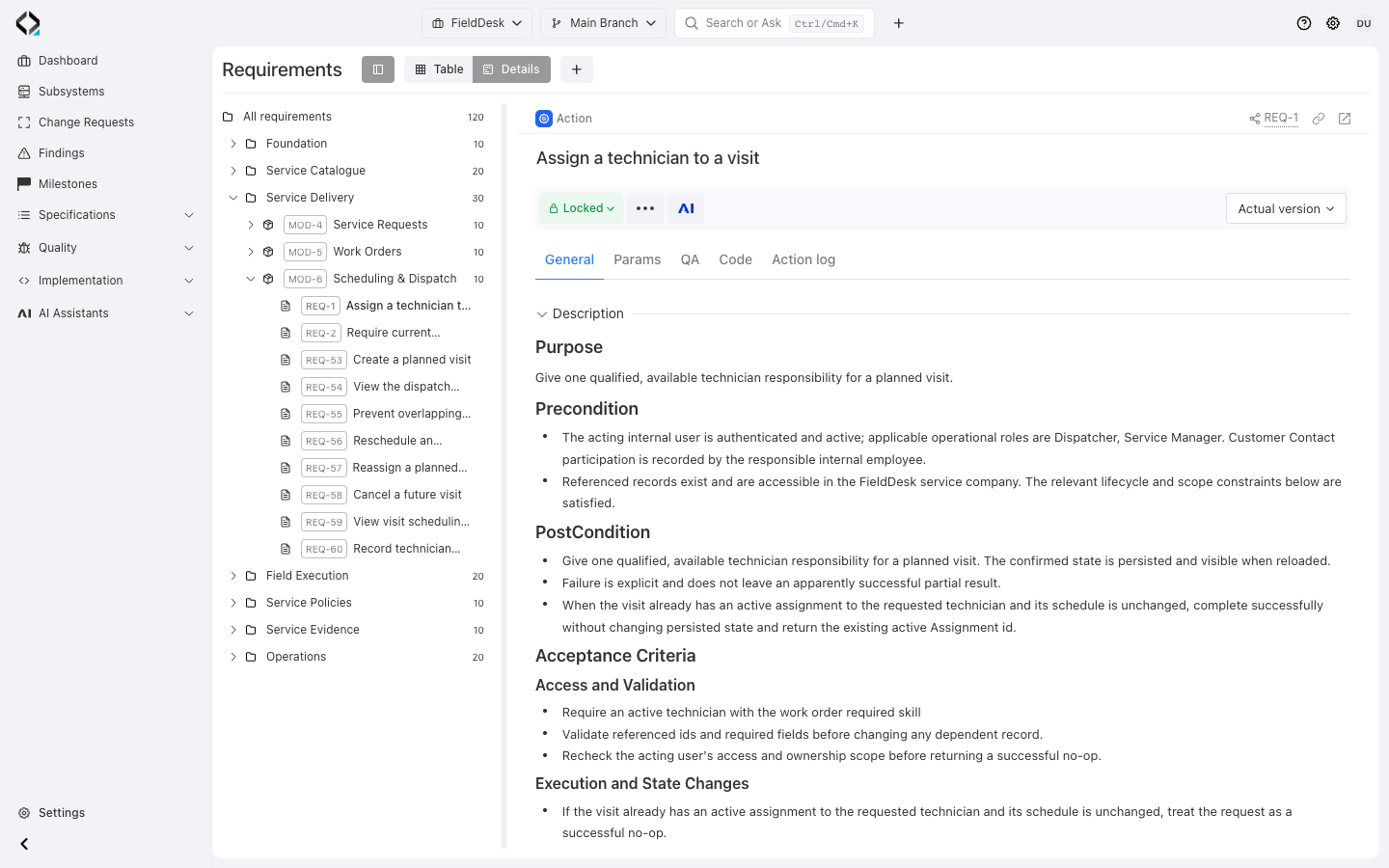
Specifications, implementation and tests
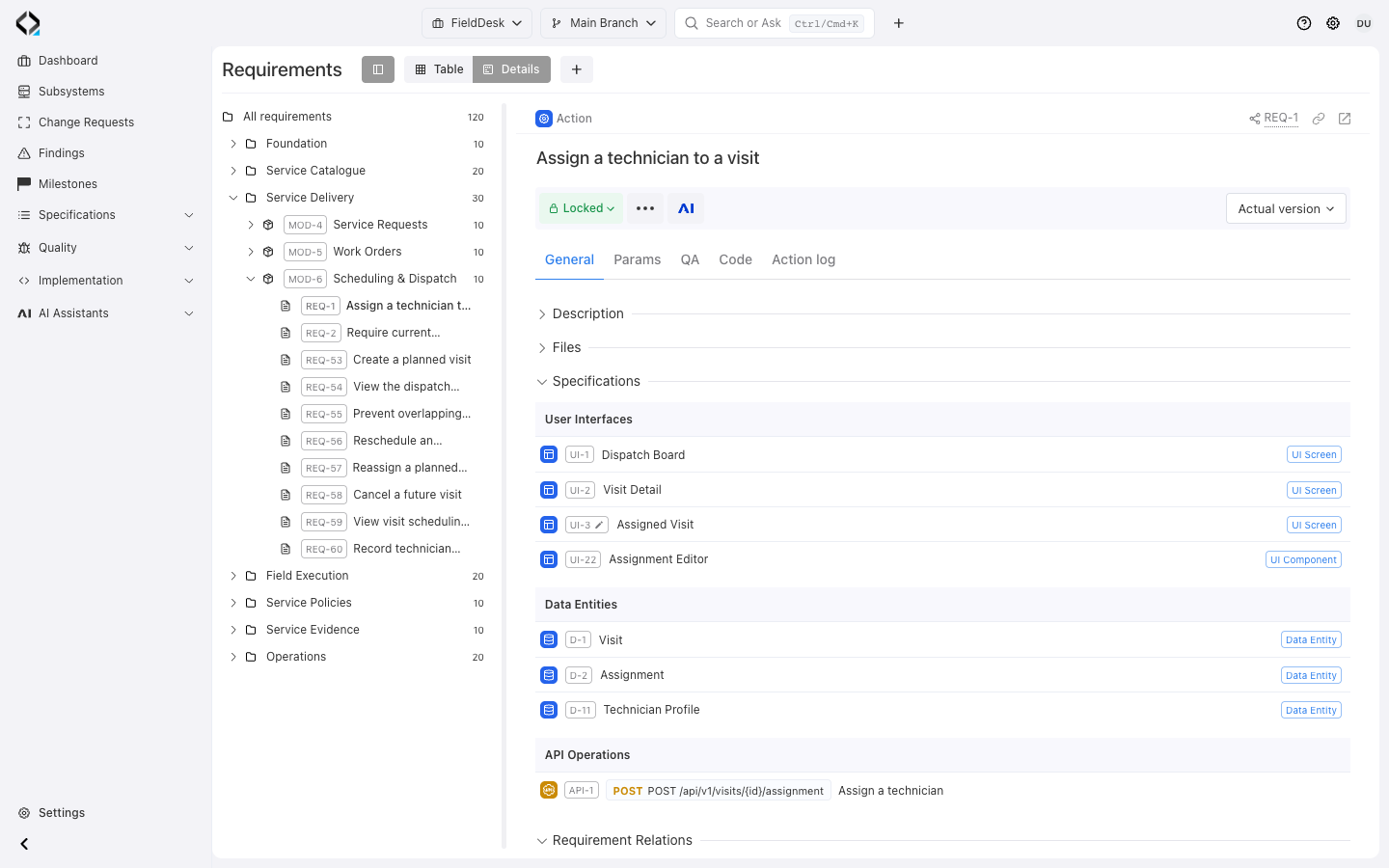
The same REQ-1 connects to User Interfaces, Data Entities and the technician assignment API.
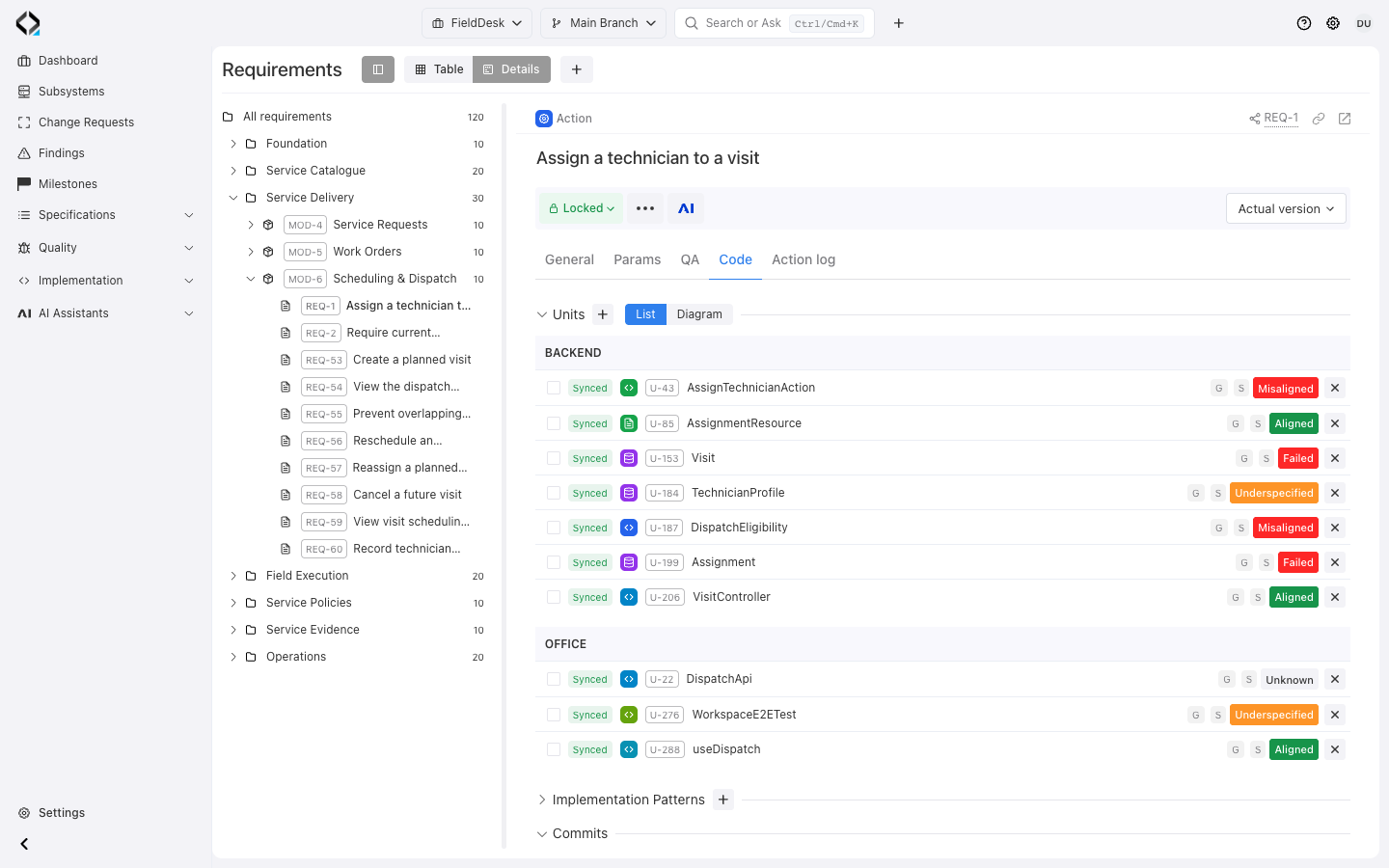
REQ-1: linked Software Units across BACKEND and OFFICE, with their specification alignment states.
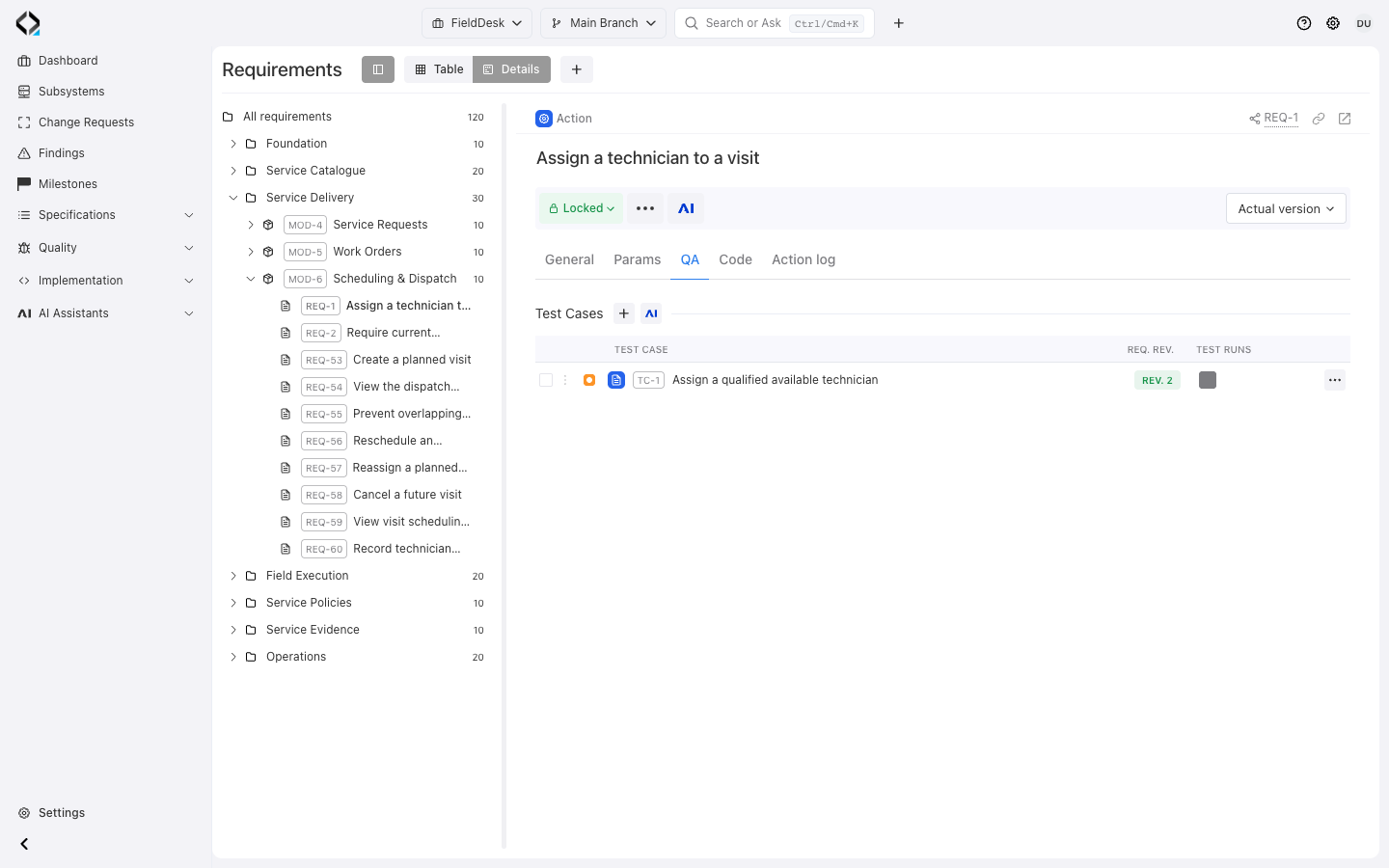
REQ-1: test case TC-1 is linked to requirement revision 2; its test run is planned.