Feature Discovery & Implementation
CR-* key.
Discovery Before Coding
Reqode helps teams understand the result before an AI coding agent changes files. Product decisions, spec deltas, branch scope, and implementation context stay connected.
Start from context
Use a module, requirement, data entity, UI, software unit, or issue.
Investigate impact
Ask AI Expert when the team needs references, source files, risks, or recommended next actions before changing specs.
Clarify decisions
AI Analyst asks only necessary questions, proposes answer options, and stores an execution brief for the spec pass.
Review spec changes
Inspect diffs, edit descriptions, adjust proposed items, and keep AI output separate from product truth until Apply.
Apply under a CR
Link the AI Analyst changes to a Change Request and apply the reviewed result in the main or feature branch.
Hand off Change Request
The coding agent reads the Change Request, affected specs, AI Analyst summaries, app manifest, architecture guidelines, and file traces through MCP.
AI Analyst narrows uncertainty before it writes specs
The analyst reads available context, asks focused questions, and offers meaningful options when the product context supports them.
When enough detail is known, it stores source facts, assumptions, relevant artifact keys, and a concrete execution brief for the specification pass.
Example clarification questions
- Which actors can approve enterprise onboarding?
- Should rejected onboarding return to draft or become terminal?
- Should the API expose approval state in the existing endpoint or a new operation?
- Which UI transition should notify the requester?
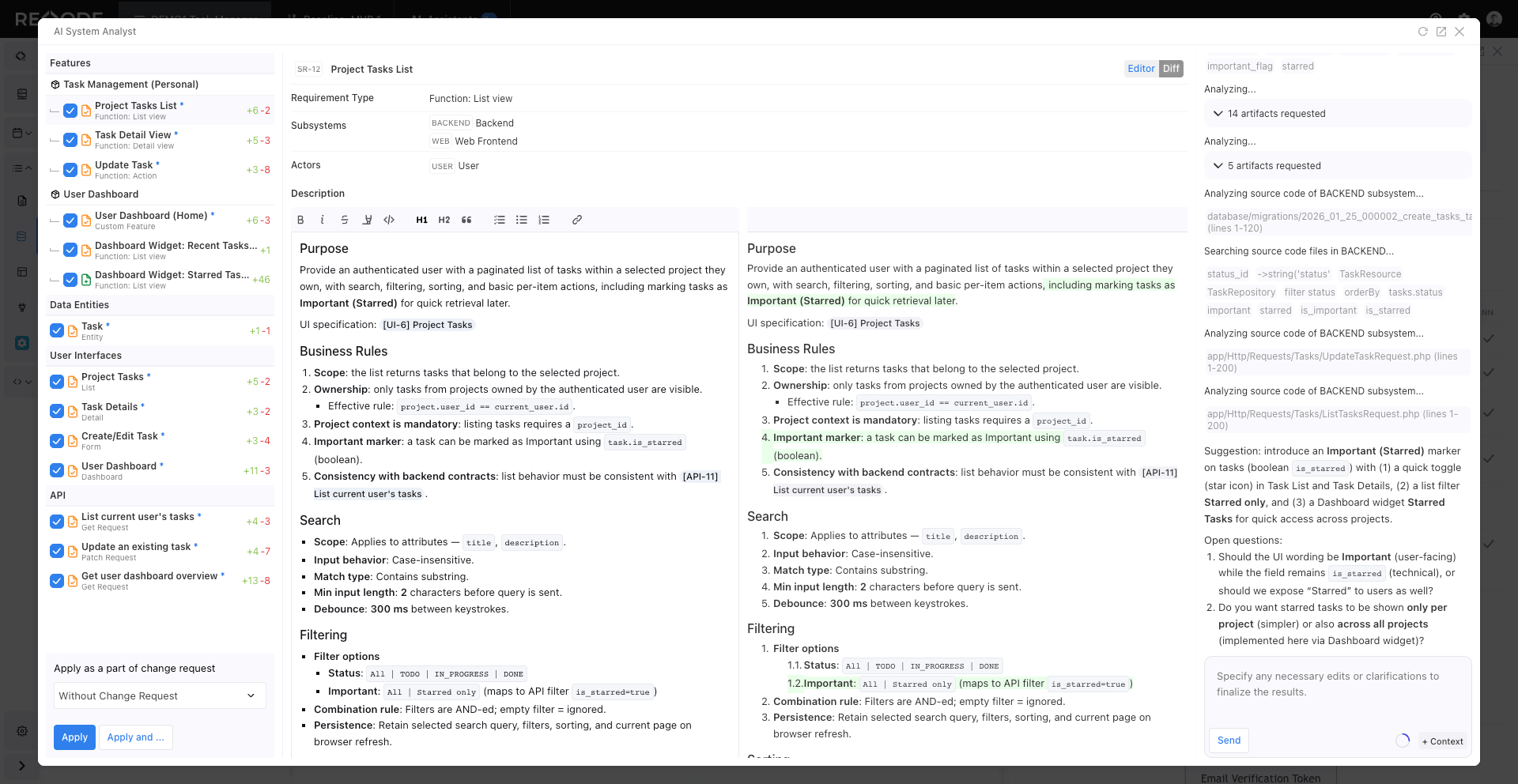
AI Analyst output is not product truth until humans apply it
AI Analyst produces structured changes for requirements, data entities, user interfaces, wireframes, API operations, and justified unit links.
The result is diffable, editable, and scoped to the actual changes. Users review the proposed deltas instead of re-reading entire specifications: they can refine proposed descriptions and then apply the effective result explicitly.
Choose the Right Starting Point
Feature discovery can start from an idea, an existing spec, a Change Request, code, or a detected mismatch. The end state is the same: implementation-ready context.

Idea first
Use AI Analyst clarification when the desired outcome is known but behavior, edge cases, and contracts are still open.

AI Expert first
Use AI Expert when the team needs to understand current specs, source files, and likely impact before deciding what to change.

Change Request first
Create the work package first when the feature is already approved and needs branch scope, review history, and one handoff key.

Known spec first
Start from REQ-*, UI-*, API-*, D-*, module, or unit when the affected artifact is already clear.

Code first
Trace a source file to units and specs, then decide whether the intended change belongs in specifications, implementation, or both.

Findings- and Issues-driven
Start from system-detected findings when verifier evidence shows a mismatch, or from human-created issues when people raise ideas, concerns, bugs, or other reasons for change.
What Becomes Implementation-Ready
Reqode keeps the discovery trail connected so the coding agent does not have to infer the feature from a loose prompt.

Decisions

Specifications

Change Request

MCP context
Give the agent a key, not a wall of context
After Apply, the implementation prompt can be compact because Reqode MCP provides the branch-aware context on demand.
Use Reqode MCP as source of truth.
Start from CR-123.
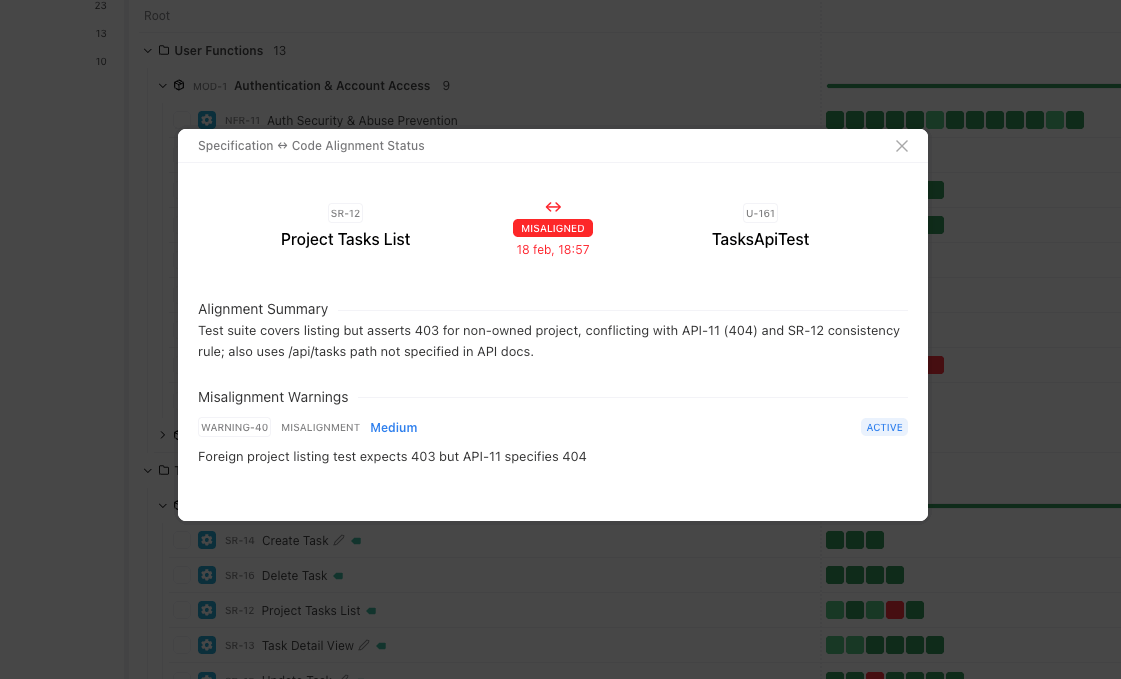
Verification closes the loop
The coding agent implements against Reqode context. After that, alignment checks and Findings help the team see whether specs, units, files, and behavior still match.
If the implementation exposes an incomplete or contradictory spec, the team can continue discovery under the same Change Request or create the next one with evidence.
Before and After Reqode
The main change is timing: discovery and specification happen before the coding agent starts editing files.
Without Reqode
- The feature brief lives in chat, a ticket, or a prompt.
- AI coding starts before product decisions are clear.
- Specifications are updated after implementation or not updated at all.
- Reviewers reconstruct why code changed.
With Reqode
- Discovery happens before implementation.
- AI Analyst asks focused questions and proposes options.
- Specification changes are reviewed before Apply.
- The coding agent receives
CR-123and reads focused and traceable context through MCP.
Build with discovery, not guesswork
Reqode keeps feature intent, AI analysis, specifications, Change Requests, coding-agent context, and verification connected from the first idea to implemented code.