Contact Us
Requirements Tracking in Reqode
Reqode is not only a tool to describe and maintain product specifications. It also helps you manage development in a structured and requirement-driven way. Instead of focusing only on tasks or tickets, Reqode allows you to manage work around requirements such as use cases or user stories — the real product capabilities that deliver value to users.
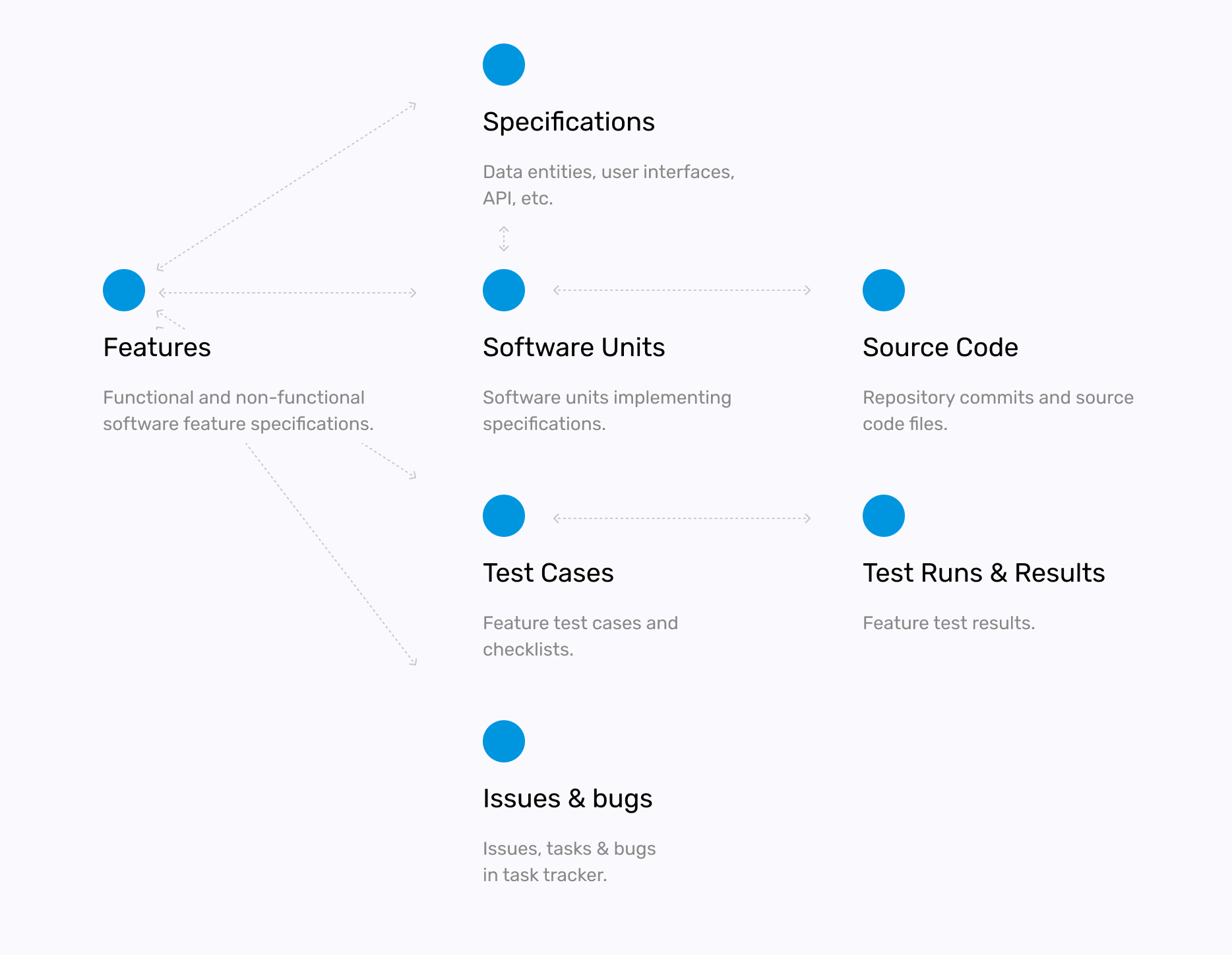
Requirements Tracking connects specifications, implementation, testing, and change management into one structured system. This helps teams clearly understand what is being built, why it is being built, and what the current state of each requirement is.
Manage Development by Requirements
In many teams, development is managed through tasks or tickets. However, tasks alone do not show the full picture. A single use case can span multiple specifications, change requests, and test cases. Without a structured requirements layer, it becomes difficult to understand overall progress and risks.
Reqode introduces Requirement as a first-class entity. This allows you to manage development at a software functionality level , while still keeping full technical visibility.
In Reqode, you can:
- Define and describe Requirements in a decomposed structured way
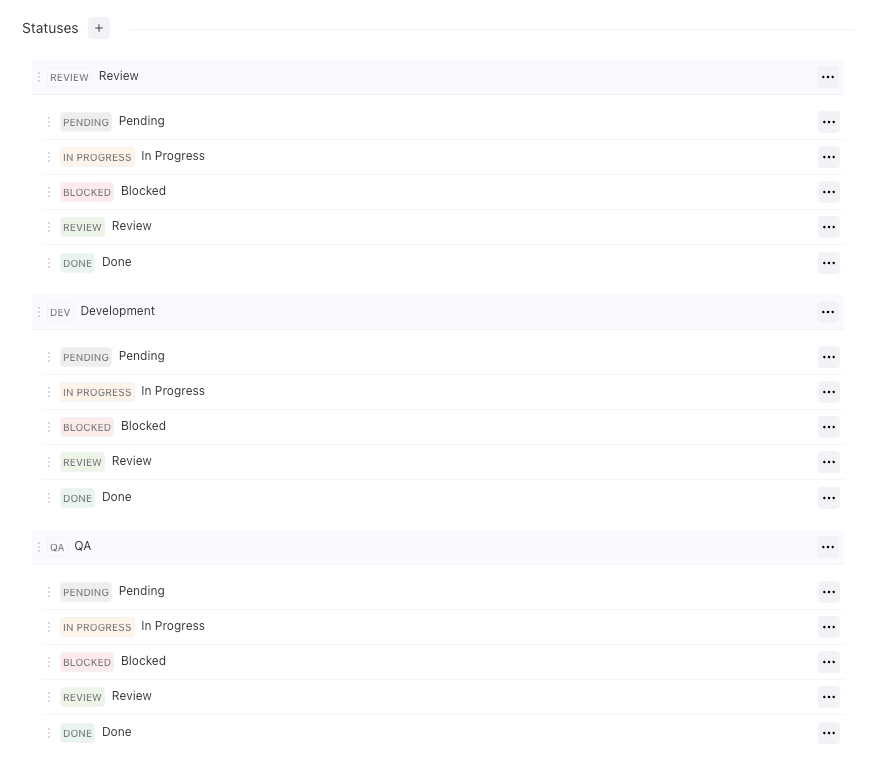
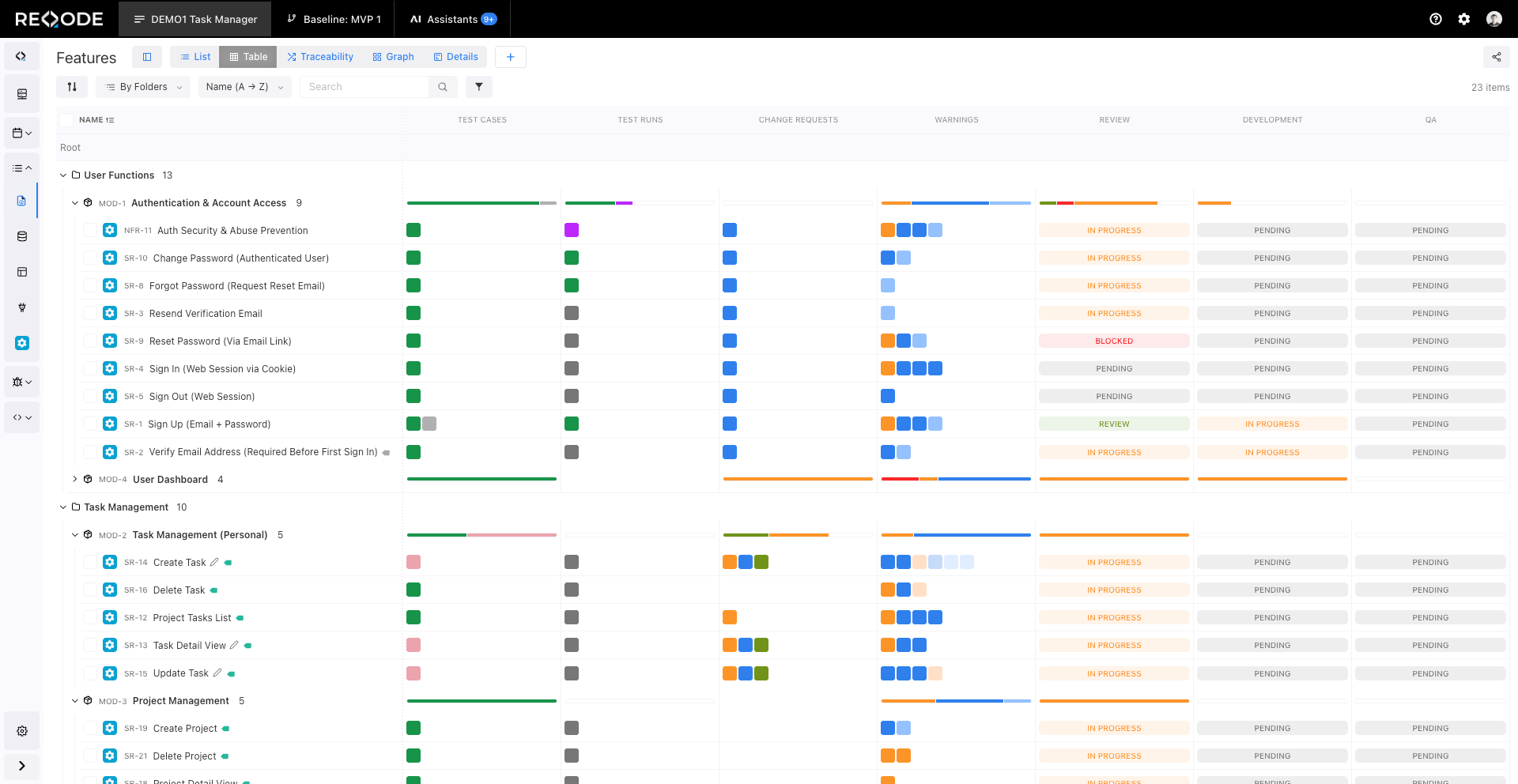
- Set and update the status of Requirements (planned, in progress, completed, etc.) with a breakdown into stages (design, dev, qa, etc.)
- Link Requirements to Software Units that implement them
- Link tasks and issues to requirements
- Monitor test coverage, runs, and results for each requirement
Reqode as a Product Command Center
Product development usually requires switching between many tools: documentation systems, repositories, task trackers, CI systems, and test platforms. This creates fragmentation and makes it difficult to see the real status of the product.
Reqode can act as a central command point that brings all this information together around requirements.
From a single requirement view you can:
- Review its and related specifications
- Check implementation alignment
- See linked change requests and tasks/issues (integration with an external task tracker or use of a simple built-in tracker)
- Identify architectural or security concerns
- Check test coverage level, planned tests, and recent test execution
This gives product managers, architects, developers, and QA engineers a shared and consistent view of reality.
Why Requirements Tracking Matters
Requirements Tracking in Reqode reduces blind spots between business intent and technical reality. Instead of managing disconnected artifacts, teams manage a structured system where every requirement has context, implementation details, and validation evidence.
With this approach, you:
- Gain better visibility into progress
- Detect risks earlier
- Improve collaboration between roles
- Reduce misalignment between specification and code
- Reduce misalignment between specification and code
Reqode helps teams move from fragmented development management to a unified, requirement-centered workflow that supports clarity, control, and quality.
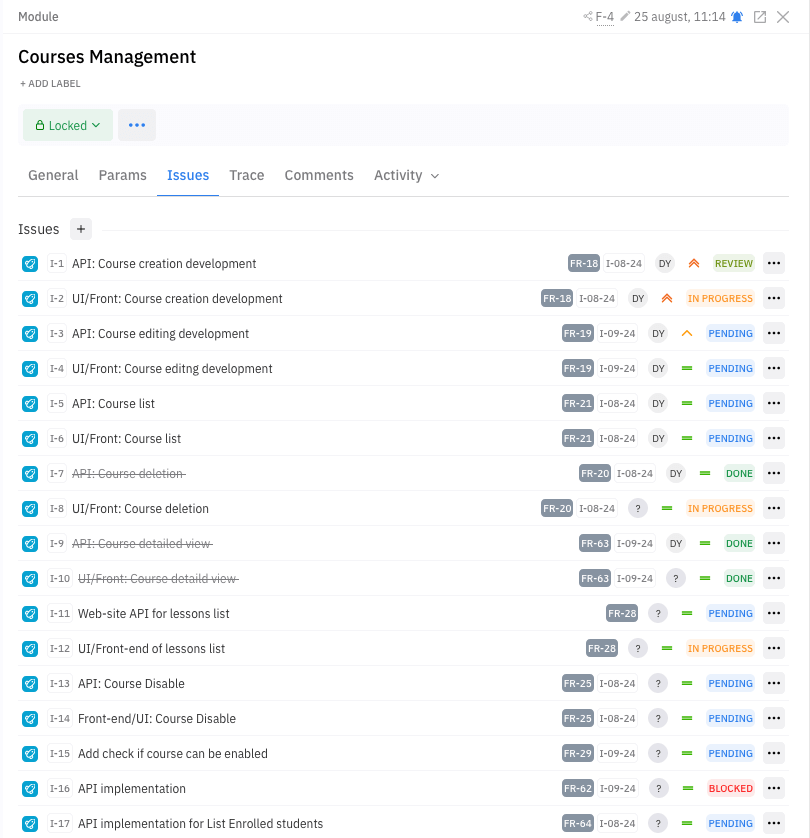
Issue Tracking
Quick access to the list of tasks and issues related to the requirement. You can integrate your preferred task tracker software or use built-in.
Custom Statuses
Custom artifact statuses allow tracking artifact implementation according to your process.